AIOps + AgentOps · Operational and Agentic Intelligence

Operational and Agentic Intelligence
for increasingly autonomous operations.

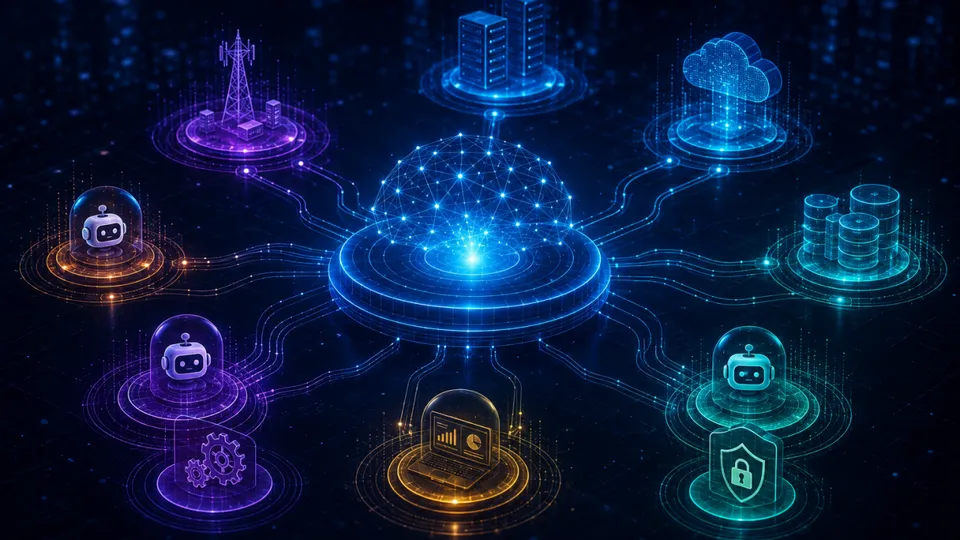
AIOps + AgentOps connected by a shared operational context.

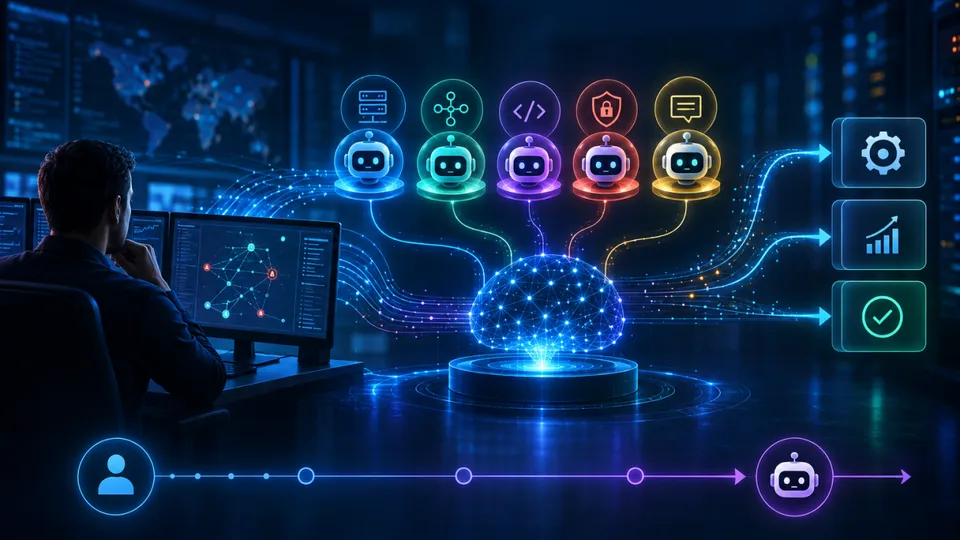
Argus connects what happens in operations to the work of people, automations and AI agents. It correlates events, cuts noise and builds a shared, systemic view to understand, coordinate and govern decisions and actions in complex environments.

1What happens
InfrastructureServicesApplicationsNetworkCloud

Your tools stay where they are and keep generating events and alarms.

events, alarms and changes · read only
2Argus understands and governs
AIOps Understands operations 34 alarms → 1 incident with impact and probable cause
Argus Shared Operational Context services · dependencies · changes · history
AgentOps Governs who acts every decision, tool call and cost with policy and trail
the same context, with policies and permissions
3Who acts
PeopleNOC, SRE and on call teams decide with context
AutomationsWorkflows triggered with criteria
AI agentsThey act within the allowed autonomy

Decisions, actions and results flow back into the context. That is how everything stays traceable.

128
native integrations
0
tools replaced
Free
to try in your own environment

Event sources, ITSM, cloud and models · 128 native integrations

Zabbix· Dynatrace· ThousandEyes· Grafana· Prometheus· Elastic· Splunk· ServiceNow· Jira· Datadog· AWS· Azure· Kubernetes· Telegram· OpenAI· Anthropic· Gemini· Ollama· vLLM· Zabbix· Dynatrace· ThousandEyes· Grafana· Prometheus· Elastic· Splunk· ServiceNow· Jira· Datadog·
The problem

Plenty of data. Not enough context to decide.

Monitoring, observability, ITSM, security, cloud and automation each see a different part of the environment. People and teams have to piece this information together to understand what is really happening.

Now AI agents also analyze situations, query systems and take actions. Without shared context, they can create a new layer of silos.

01

Fragmented tools

Different views of the operational reality.

MonitoringAPMITSMCloudSecurity
5 tools, 5 versions of the same incident
02

Fragmented knowledge

Relationships and dependencies rebuilt by hand.

agg-sp-02AGG-SP-02.core10.20.4.2CIRCUITO-SP-1182
4 names for the same element
03 · New

Fragmented agents

Different contexts, models, tools and rules.

NOC agentITSM agentInternal copilot
3 agents, 3 views of operations

Adding AI to a fragmented operation does not remove the fragmentation. It may only create a new layer of it.

The platform

One operation. One context.

People, automations and AI agents working on the same operational reality.

AIOps Understand operations. Events, alarms, incidents, impact and probable cause.
Shared Operational Context Connect understanding and action. eventsservicesdependencieschangeshistory
AgentOps Observe, coordinate and govern agents. Executions, decisions, tool calls, policies and results.
  1. 1What happened
  2. 2What it means
  3. 3What was decided
  4. 4What was done
  5. 5What the result was

Argus connects this chain end to end.

AIOps + AgentOps in practice

From operations to action. From action to results.

AIOps

Understand what is happening.

34 alarms · 6 sources
CRIT · Zabbix · link saturated
WARN · Dynatrace · API latency
WARN · ThousandEyes · degraded route
CRIT · Elastic · repeated 500 errors
INFO · ServiceNow · CHG0043127
CRIT · Kubernetes · pod restarting
Argus
1 operational context
P1 Payments core degraded
Probable cause: change CHG0043127 saturated the aggregator link and degraded the service route.
34 related alarms 6 sources 9 services

Illustrative example.

  • CorrelateRelated events.
  • ReduceNoise and duplicates.
  • ContextualizeImpact, dependencies and probable cause.
AgentOps

Understand and govern what agents are doing.

  1. ContextP1 incident · 9 affected services
  2. AgentInvestigation agent
  3. DecisionCheck the related change
  4. ToolTool call to ITSM
  5. ActionRecommend rollback · requires approval
  6. ResultLogged in the incident

Illustrative example.

  • ObserveExecutions, decisions, tool calls, errors and latency.
  • CoordinateAgents, tools and workflows.
  • GovernPolicies, permissions, auditing and human oversight.

Observing operations is not enough. You also need to observe who acts on them.

Governance, autonomy and costs

More autonomy demands more control.

Governance
  • Policies
  • Permissions
  • Auditing
  • Traceability
Progressive autonomy
  1. Observes
  2. Recommends
  3. Requests approval
  4. Executes
Performance
  • Latency
  • Errors
  • Results
Costs
  • Tokens
  • Calls
  • Models
  • Agents
  • Workflows
ConsumptionCostExecutionOperational result

It is not just about knowing how much AI costs. It is about understanding where it is used and what result it produces.

Platform capability

AI Gateway

The AI Gateway applies policies and routes calls across models and cloud or on premises environments.

  1. Agent
  2. Policy
  3. Model
  4. Execution
  5. Consumption and cost
  6. Result

Human oversight when needed. Autonomy when allowed. Traceability always.

  • SSO, RBAC and audit trail
  • Encryption in transit and at rest
  • Read only credentials and least privilege
  • Operational data does not train public models
  • Configurable retention and minimization
  • Brazilian vendor, with local contract and support
Integrations

Connect what you already use.

Get more value from what is already in place.

Monitoring & Observability
ZabbixDynatraceThousandEyesGrafanaPrometheus
ITSM & Operations
ServiceNowJiraAPIsWebhooks
Cloud & Infrastructure
AWSAzureGoogle CloudKubernetes
Communication & Automation
TelegramAPIsWebhooksWorkflows
AI & Models
OpenAIAnthropicGeminiOllamavLLM

Argus does not replace your ecosystem. It connects the pieces to get more value from what is already in place.

See all integrations128
🐶
Datadog
Observability
●
🔥
Prometheus
Observability
●
📊
Grafana
Observability
●
🦊
Grafana Loki
Observability
●
📟
Grafana OnCall
Observability
●
📟
Grafana Incident
Incident Response
●
🟢
New Relic
Observability
●
🔷
Dynatrace
Observability
●
🔷
Dynatrace Managed
Observability
●
🟡
Elastic
Observability
●
📊
Kibana
Observability
●
📋
Graylog
Observability
●
📡
Axiom
Observability
●
📡
Coralogix
Observability
●
📊
Dash0
Observability
●
📈
Signalfx
Observability
●
📊
Sumo Logic
Observability
●
📈
VictoriaMetrics
Observability
●
📜
VictoriaLogs
Observability
●
🔍
OpenObserve
Observability
●
📂
Parseable
Observability
●
📊
Netdata
Observability
●
📡
NetXMS
Observability
●
📡
LibreNMS
Observability
●
🛎️
Icinga2
Observability
●
📊
Centreon
Observability
●
✔️
Checkmk
Observability
●
✅
Checkly
Observability
●
📡
Pingdom
Observability
●
🍰
StatusCake
Observability
●
🌐
Site24x7
Observability
●
👁️
ThousandEyes
Observability
●
⏱️
Uptime Kuma
Observability
●
📡
Vector
Observability
●
🟥
Zabbix
Observability
●
📟
PagerDuty
Incident Response
●
🚨
OpsGenie
Incident Response
●
🆘
Incident.io
Incident Response
●
🧠
Incident Manager
Incident Response
●
🦺
Squadcast
Incident Response
●
⚡
Zenduty
Incident Response
●
⚡
FlashDuty
Incident Response
●
🌳
PagerTree
Incident Response
●
🚨
iLert
Incident Response
●
📳
SIGNL4
Incident Response
●
🔎
Splunk
Logs & APM
●
🟣
Sentry
Logs & APM
●
🎯
Rollbar
Logs & APM
●
🧭
AppDynamics
Logs & APM
●
🍯
Honeycomb
Logs & APM
●
📊
PostHog
Logs & APM
●
☁️
AWS CloudWatch
Cloud
●
🔵
Azure Monitor
Cloud
●
🟩
GCP Monitoring
Cloud
●
⎈
Kubernetes
Cloud
●
🔴
OpenShift
Cloud
●
☁️
EKS
Cloud
●
🟩
GKE
Cloud
●
🔷
AKS
Cloud
●
🟧
Cloudflare
Cloud
●
🪣
S3
Cloud
●
📬
Amazon SQS
Cloud
●
🧱
Kafka
Cloud
●
📦
ClickHouse
Cloud
●
📊
BigQuery
Cloud
●
❄️
Snowflake
Cloud
●
🍃
MongoDB
Cloud
●
🐬
MySQL
Cloud
●
🐘
PostgreSQL
Cloud
●
📊
Databend
Cloud
●
🔍
OpenSearch Serverless
Cloud
●
🚀
ArgoCD
Cloud
●
🔄
FluxCD
Cloud
●
🌬️
Airflow
Cloud
●
🔗
Cilium
Cloud
●
💬
Slack
Communication
●
👥
Microsoft Teams
Communication
●
💬
Google Chat
Communication
●
🎮
Discord
Communication
●
✈️
Telegram
Communication
●
✉️
SMTP / Email
Communication
●
📱
Twilio
Communication
●
🔔
Pushover
Communication
●
📣
ntfy
Communication
●
📧
Mailgun
Communication
●
📧
SendGrid
Communication
●
📧
Resend
Communication
●
🎥
Zoom
Communication
●
🗨️
Mattermost
Communication
●
🧩
Jira
Ticketing
●
🧩
Jira (On-Prem)
Ticketing
●
🧾
ServiceNow
Ticketing
●
📐
Linear
Ticketing
●
📊
LinearB
Ticketing
●
🐙
GitHub
Ticketing
●
⚙️
GitHub Actions
Ticketing
●
🦊
GitLab
Ticketing
●
⚙️
GitLab Pipelines
Ticketing
●
🎫
Zendesk
Ticketing
●
🧠
YouTrack
Ticketing
●
📌
Redmine
Ticketing
●
📋
Trello
Ticketing
●
📅
Monday.com
Ticketing
●
📊
Microsoft Planner
Ticketing
●
☁️
Salesforce
Ticketing
●
🛡️
Wazuh
Security
●
🦅
Falco
Security
●
🛰️
GuardDuty
Security
●
🔗
Webhook
Communication
●
🌐
HTTP
Communication
●
🔌
WebSocket
Communication
●
🔐
SSH
Cloud
●
🐍
Python
Cloud
●
💻
Bash
Cloud
●
📊
QuickChart
Cloud
●
🧪
Mock
Cloud
●
🖥️
Console
Cloud
●
😴
Sleep
Cloud
●
🗂️
NetBox
Cloud
●
🤖
OpenAI
AI & Models
●
🧠
Anthropic
AI & Models
●
✨
Gemini
AI & Models
●
🔍
DeepSeek
AI & Models
●
🧠
Grok
AI & Models
●
🦙
Ollama
AI & Models
●
⚡
vLLM
AI & Models
●
🧩
LiteLLM
AI & Models
●
🦙
Llama.cpp
AI & Models
●

Your tool is not on the list? Webhooks, HTTP API and the generic integration cover virtually any source that emits events.

Where Argus creates value

From operational complexity to results.

01 Noise reduction Alarms → prioritized context.
02 Incident investigation Events + dependencies + changes → impact and probable cause.
03 Agentic operations Agents acting on shared context.
04 AI governance Decisions and actions within the organization's policies.
05 AI cost control Consumption per agent, model and workflow, tied to results.

Telecom, ISP and MSPBanking and financeIndustryLarge enterprises

Trials and POC

Start with a real problem.

  1. 1ConnectIntegrate a few sources
  2. 2ContextualizeBuild operational context
  3. 3ValidateMeasure the results
Plans

Start for free. Grow as your operation grows.

Free

R$ 0 / for a limited period

Try Argus in your own environment.

Start for free →
Premium

Contact us

Take Operational and Agentic Intelligence to production.

Talk to a specialist →

See and compare plans →

FAQ

The questions we hear most

Does Argus replace my monitoring? Do I need to switch tools?+
No. Argus relies on your monitoring to keep working. It does not replace your collection and observability tools. It consumes the events they already produce, relates information across different sources and builds context to help identify the incident, its impact and its probable cause.
I already have Zabbix, Dynatrace, Datadog or Splunk. What does Argus add?+
These tools keep doing their jobs. Each one offers depth within its own domain. Argus connects these domains to answer a different question: what is the incident, what is the probable cause, who is affected and what is happening across the operation as a whole?
How does the integration work in practice?+
In most cases, through read only credentials on the tool's API or through a webhook. Argus has native integrations and also lets you connect other sources through HTTP API and webhooks, without requiring a new collection layer or telemetry agent.
What if I have no CMDB or documented topology?+
Argus does not need a perfect CMDB to get started. Identities, relationships and dependencies can be built progressively from the events and integrations themselves. An existing CMDB becomes one more source of context.
Will I lose alarms in the correlation and noise reduction process?+
No. Events remain recorded and searchable. Symptoms and duplicates may stop paging a person individually, but they stay linked to the incident and available as evidence.
I already have my own AI and agents. Why would I need Argus?+
Because agents also need to understand the operational reality they act on. Argus provides shared operational context and adds observability, coordination and governance to the work of the agents your organization already has.
Does Argus replace my AI agents?+
No. Your own or third party agents can work with Argus. The platform lets you connect them to the operational context and follow their decisions, executions and results.
Which AI model is used? Can I use my own models?+
Your organization can use models from approved providers or models hosted in its own environment. The AI Gateway lets you apply policies and route calls across different models and cloud or on premises environments. Your operational data is not used to train public models.
How does Argus help control AI costs?+
Argus tracks consumption and costs tied to agents, models and workflows, including calls and tokens. This lets you relate consumption, performance, execution and results, and create policies for more efficient use of models.
Can agents take actions automatically?+
Yes, when allowed by your organization's policies. Autonomy can evolve from observation and recommendation to human approval or automatic execution, according to criticality, permissions and defined rules.
My team has no time. How much effort does a POC take?+
The POC has a defined scope and runs on a real scenario. On the customer side, it usually requires access to the selected sources, a technical point of contact and participation in the validation steps, with no need to replace tools or redesign existing data collection.
How does Argus deliver a return?+
With AIOps, it reduces triage effort, time to understand incidents, unnecessary escalations and the impact of degraded services. With AgentOps, it adds governance over agents, models and executions, including visibility and control over the consumption and costs of agentic AI.
Next step

Understand operations. Govern the action.

AIOps + AgentOps connected by the same operational context.

Turn fragmented data into context and make AI's work more observable, coordinated, governed and financially controllable.

✓ No current tool has to be taken offline
✓ 128 native integrations ready to connect
✓ Progressive autonomy, with human oversight and traceability

No credit card · Our sales team replies within 1 business day